
Last updated November 16, 2026
 AC repair
 Furnace & heating
 Heat pumps
 Ductless mini splits
 Carrier
 Trane
 Goodman
Seasonal tune-up and full diagnostic on your Carrier, Trane, or Goodman system - readings shown to you before any repair is proposed
Diagnosis first, numbers second - you approve the repair price before a single part goes in.
Get your free estimateAC Installation Troubleshooting in Pembroke Pines: Common Problems and How to Fix Them
Here’s the frustrating part of a new AC install: a system can pass its startup check, cool the house for a week, and then start short-cycling or sweating like it never left the factory floor. A brand-new unit that can’t hold temperature in a Pembroke Pines summer, or that runs in short bursts while the air stays clammy, is almost certainly telling you the installation was off, not that the equipment is defective. That distinction matters because the manufacturer warranty covers the box, and it usually says nothing about a bad charge, a wrong-sized unit, or a thermostat wired to the wrong terminal. This guide walks through the most common post-installation problems we see in Pembroke Pines, how to tell equipment failure from installation error, and how to document what you find so you’re protected.
Quick Answer
Most problems in the first weeks after AC installation in Pembroke Pines trace back to installation errors rather than bad equipment: an oversized unit that short-cycles, an incorrect refrigerant charge, a thermostat wiring mistake, or duct and airflow issues the installer never measured. Manufacturer warranties generally cover parts, not labor or installation faults, so the fix is usually a callback to the installing contractor, not a warranty claim. Document every symptom with dates before you call, and bring in an independent technician for a second opinion if the installer won’t address it.
Styles & brands we work with
- AC repair
- Furnace & heating
- Heat pumps
- Ductless mini splits
- Carrier
- Trane
- Goodman
Table of Contents
- Why Does My New AC Short-Cycle After Installation?
- Why Is My New AC Running But the House Still Feels Humid?
- What Are the Unusual Noises in the First 30 Days?
- How Do You Tell Installation Error From Equipment Defect?
- How Do You Document Installation Defects to Protect Yourself?
- Callback or Independent Assessment: Which Do You Call?
- Why Pembroke Pines Climate Tests an Installation
- Does Brand Matter When Installation Problems Show Up?
Why Does My New AC Short-Cycle After Installation?
Short-cycling is the AC turning on and off in short bursts, often every few minutes, without running long enough to actually dry the air or reach a steady temperature. In a brand-new installation, this points to one of three things: a unit sized too large for the home, a refrigerant charge that isn’t right, or a thermostat wired to the wrong terminal or set up wrong. All three are installation problems, and all three are fixable. Here’s how to think through each.
An oversized unit
Oversizing is common after installation, especially when a contractor matches the new unit to the old one without doing a load calculation for the home as it stands now. An oversized unit cools the space fast and shuts off before it pulls the humidity out, so the room hits the thermostat setting while the air still feels sticky. It also cycles more often, which shortens equipment life and strains the compressor.
Refrigerant charge errors
Too much or too little refrigerant changes the pressure the system runs at, and that throws off the timing of the cooling cycle. A unit that was charged by pressure alone, without weighing in the charge against the manufacturer’s spec for that model and line length, can short-cycle or fail to reach the set temperature. You can’t check this yourself without gauges and a trained eye, but you can note the pattern.
Thermostat wiring mistakes
A thermostat wired to the wrong terminal, or one set up for a different system type, can make the compressor stage in and out at the wrong times. This shows up as odd behavior: heat on a cool setting, the fan running when it shouldn’t, or the unit shutting off before the room is cool. If the thermostat display looks fine but the cycle behavior is strange, wiring is the place to start.
What to note before you call
- Time how long the unit runs and how long it rests between cycles for a full afternoon.
- Write down the thermostat setting and the room temperature on a separate thermometer.
- Note whether the filter is clean and whether any vents are blocked by furniture.
- Write down the outdoor conditions on that day, since Pembroke Pines summers put a heavy load on a system that’s working right.
Why Is My New AC Running But the House Still Feels Humid?
High indoor humidity after a new installation usually means the system is removing heat but not moisture, and that’s an airflow or sizing problem, not a sign you need a bigger unit. In Florida’s climate, the AC does most of the dehumidification, so a setup that cools fast and shuts off leaves the air damp. The temperature can read 76 and the house still feels heavy and sticky. That’s the tell.
Common installation causes of humidity problems
- Oversizing: a unit too large for the home cools quickly and never runs long enough to pull moisture out of the air.
- Blower speed set too high: fast airflow across the coil means less contact time, so the coil can’t pull as much water out of the airstream.
- Duct leaks or undersized return: a return duct that’s too small starves the system for return air, which throws off both cooling and dehumidification.
- Refrigerant undercharge: a coil that never gets cold enough won’t condense water out of the air the way it should.
- Thermostat fan set to “on” instead of “auto”: a fan that runs continuously re-evaporates moisture off the coil and pushes it back into the house.
What you can check first
Look at the thermostat fan setting. If it’s set to “on” rather than “auto,” the fan is running even when the compressor is off, and that pushes moisture back into the air. Set it to “auto” and give it a day. After that, check that no furniture or boxes are blocking the return grille. If the humidity is still high and the temperature is holding, that’s a call to the installer to look at blower speed and charge.
Why humidify matters here specifically
Pembroke Pines sits in South Florida’s humid subtropical climate, where summer dew points sit in the mid-70s and the outside air is loaded with moisture. That means a system that isn’t tuned to dehumidify will feel wrong even when the thermostat says the target temperature was reached. A unit that’s correctly sized and charged runs longer and slower, which is exactly what pulls the moisture down.
What Are the Unusual Noises in the First 30 Days?
Not every new sound after installation is a problem, but some are. In the first month, we sort noises into three groups: settling sounds that go away, refrigerant-line vibration, and genuine mechanical problems. Telling them apart saves you a call in some cases and gets you one sooner in others.
Settling sounds that are normal
New equipment can make some sounds that fade as it settles. A soft tick from the thermostat, a low hum from the compressor starting, a gentle whoosh from the blower, or the occasional light metallic ping as the coil warms and cools, are all part of a new system bedding in. Equipment in a fresh installation can also make a sound or two from sheet metal expanding and contracting with temperature swings.
Refrigerant line vibration
A buzz, rattle, or hum that seems to come from the wall or from near the outdoor unit often points to refrigerant lines that were run without proper isolation. Lines that touch framing, drywall, or each other vibrate on the wall and amplify through the house. This is an installation detail: the lines should be secured, insulated, and kept from direct contact with framing or ductwork. A rattling line isn’t dangerous on its own, but it can wear through insulation or rub a fitting loose over time, so it should be fixed.
Genuine mechanical problems
These sounds are worth a callback:
- Grinding or screeching from the outdoor unit, which can point to a blower bearing or a fan motor issue.
- Loud clanking or banging at startup, which can indicate a loose part inside the compressor or a mounting bolt that wasn’t tightened.
- A high-pitched whine that runs continuously, which could be an electrical issue at the contactor or capacitor.
- A hissing sound, which can mean a refrigerant leak at a fitting installed or brazed during the job.
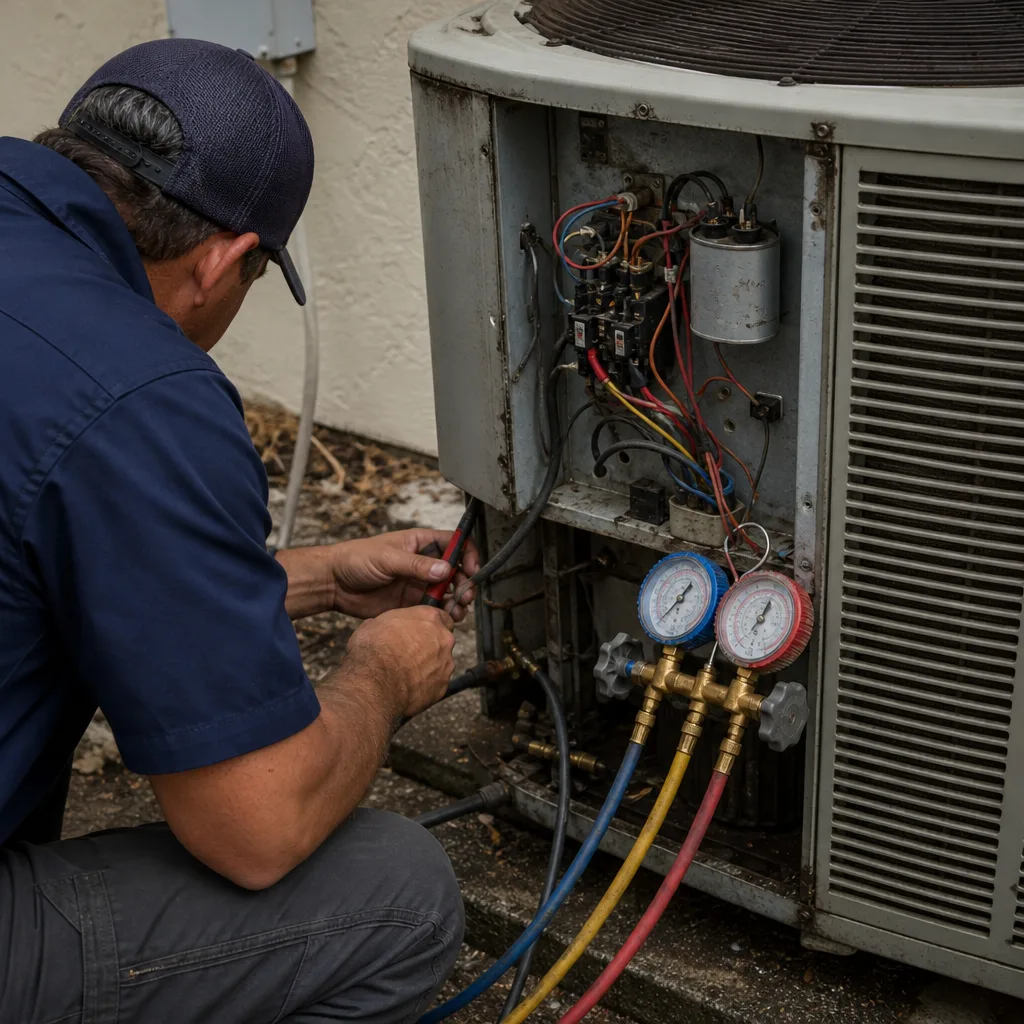
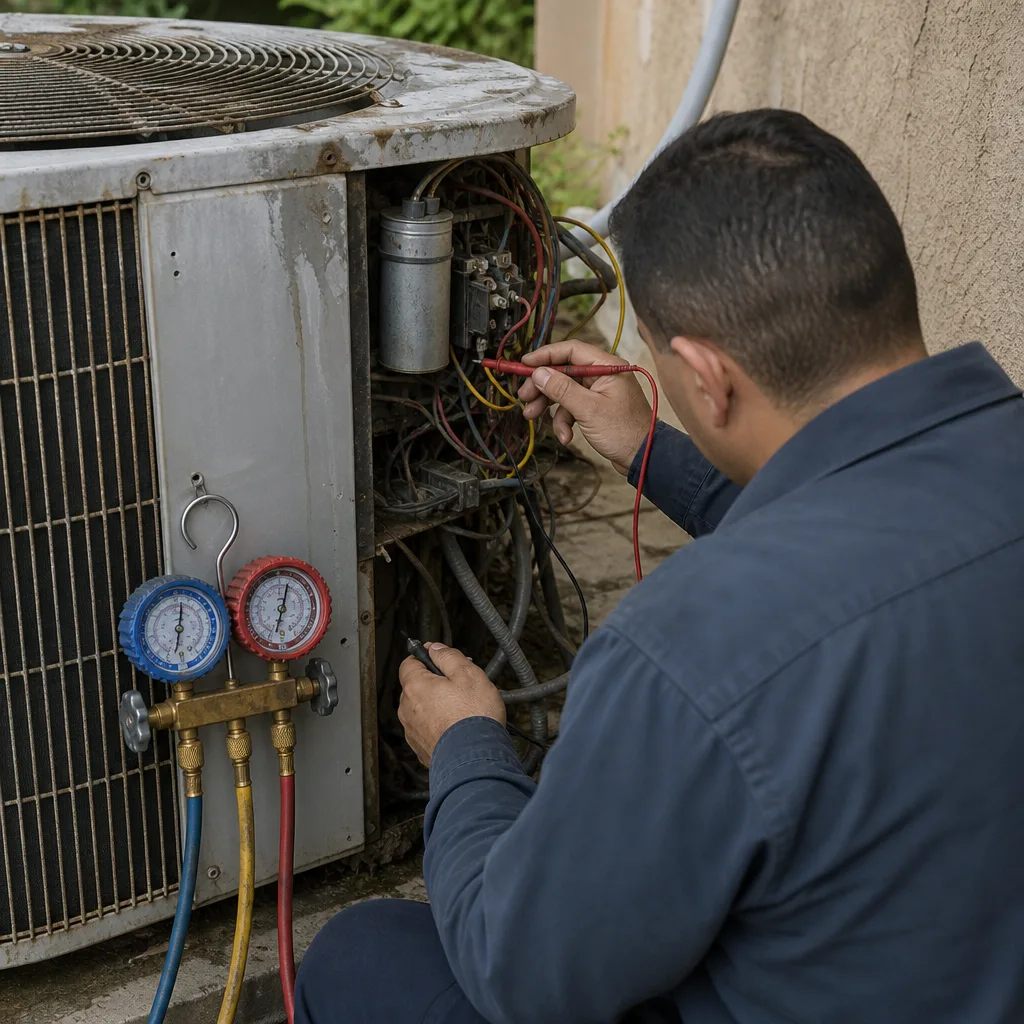
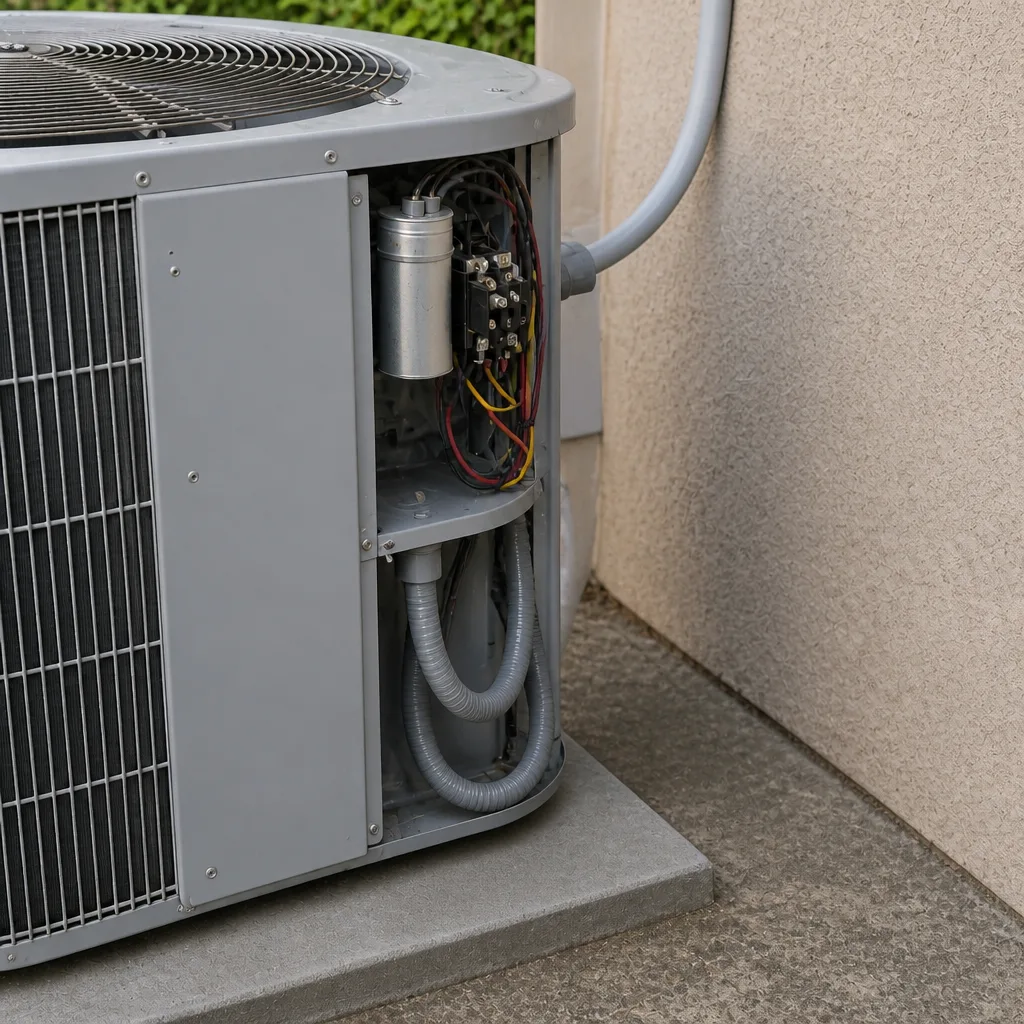
If you hear any of those, shut the system off and call the installer. Do not open the outdoor unit or touch electrical components yourself, since the capacitor and contactor can hold a dangerous charge even with the power off at the disconnect. That’s work for a trained technician.
How Do You Tell Installation Error From Equipment Defect?
The difference decides whether you call the manufacturer or the installer, and that’s the most practical question in this whole guide. Equipment defects show up as a failure of the equipment to do what it’s designed to do regardless of how it was installed. Installation errors show up as a failure of the system to behave as a whole, even though the individual parts work fine on their own.
Signs pointing to installation error
- The unit cools but doesn’t dehumidify, or the temperature swings a lot between cycles.
- The system short-cycles from day one.
- Airflow at the registers is weak or uneven between rooms.
- Noise, vibration, or rattling from line routing or duct connections.
- The system’s performance depends on the weather outside in a way it shouldn’t.
Signs pointing to equipment defect
- A compressor that fails to start at all, or a board that doesn’t power up.
- A known fault code on the unit’s diagnostic board that points to a component failure.
- A leak at a factory joint or a factory-sealed component, not a field joint.
- Refrigerant loss that traces to a manufacturing defect rather than a fitting the installer made up.
Why this distinction matters financially
Manufacturer warranties are written to cover the equipment, not the labor to install it and not the consequences of a bad install. When the problem is installation, the installer is the one accountable, and that’s why the callback goes to them, not to the manufacturer. A brand-agnostic HVAC contractor who services Carrier, Trane, Bryant, American Standard and other major brands can look at the system without a bias toward one manufacturer. When we diagnose a new installation, we look at the whole system: load, charge, airflow, and controls, not just the equipment.
How Do You Document Installation Defects to Protect Yourself?
Good documentation is what turns a “the install is bad” complaint into a case the contractor has to answer. The time to start is the day the problem starts, not after the installer has been out twice and the story has gotten murky. Here’s a straightforward process to build a record.
- Start a running log with dates and times. Note when the problem started, what the symptom was, and what the thermostat read at the time.
- Photograph the thermostat and any visible issues. Take a photo each time the symptom appears, with the display showing the set temperature and the room temperature.
- Take short videos of any noise. A 15-second video of a grinding unit or a vibrating wall is worth more than a paragraph describing it.
- Track the daily run times. For short-cycling, write down the on and off times for one afternoon so the pattern is clear.
- Keep every text, email, and service ticket. Note who you spoke to, the date, and what they said they’d do.
- Save the install paperwork. The invoice, the equipment model and serial numbers, and any startup readings the installer recorded should all be in one place.
- Keep humidity and temperature logs. A cheap hygrometer near the thermostat gives you a record of indoor humidity that supports a dehumidification complaint.
That record does two things. It gives the installer the detail they need to fix the actual problem instead of guessing, and if it ends up in a dispute, it’s the file that shows the sequence of events. When we’re called as an independent party, the first thing we ask for is exactly this kind of log.
Callback or Independent Assessment: Which Do You Call?
Start with the original installer if the system is new and under their workmanship coverage. That’s their responsibility, and most reputable contractors want to know if something’s off. Bring in an independent technician when the installer is unresponsive, when the same problem keeps coming back after visits, when you’re getting a different explanation each time, or when you need a written second opinion for a warranty or contractor dispute.
When a callback to the installer is appropriate
- The problem started within the first few weeks of installation.
- The installer has workmanship coverage in their paperwork.
- The problem is one you can point to with dates and notes.
- The installer is responsive and willing to look at it.
When to bring in an independent technician
- The same problem returns after two service visits.
- The installer says the system is “working as designed” but the symptoms say otherwise.
- You’re being told the fix requires replacing equipment when the problem looks like installation.
- You need a written assessment to take to a warranty claim or a mediation.
- The installer has stopped responding.
An independent technician gives you a reading of the system as it actually performs, not how it was supposed to be set up. If you need a full AC installation review, that assessment is the starting point. If the discussion turns into a repair versus replacement question, the answer comes down to whether the installation was ever right in the first place. A system that was installed correctly and is now failing usually gets repaired; a system that was never set up correctly gets corrected, not replaced.
Why Pembroke Pines Climate Tests an Installation
A system installed in Pembroke Pines runs a long, hard cooling season, and small installation errors that would be a minor nuisance in a milder climate show up as real comfort problems here. Pembroke Pines sits in South Florida’s humid subtropical zone, with hot, humid summers and a long cooling load that runs from spring into fall. That combination stresses the three things that matter most: sizing, charge, and airflow.
Sizing for the actual load
Oversizing is the most common sizing mistake, and it shows up as fast cooling with high humidity and short run times. The right approach is a load calculation for the home, not just a match to the old unit. Homes in Pembroke Pines vary a lot by construction, window area, and shade, so a calculation done home by home is the only way to get the sizing right.
Charge and airflow in the heat
A system that’s working right runs long and steady on a hot afternoon. A system that’s short-cycling or not hitting its target list on one of two things: refrigerant charge, or airflow. Both are checked during start-up, and both should be documented. If the installer’s paperwork doesn’t show charge readings and airflow measurements, that’s a flag.
Ducts in a hot attic
Much of the cooling a Pembroke Pines system produces goes into air that has to travel through ducts in a hot attic. Ducts with leaks, poor insulation, or tight return paths lose cooling and pick up moisture before the air reaches the register. The result feels like a system that’s underperforming even when the equipment is fine. Duct work is part of the installation assessment, not a separate add-on you order later.
Does Brand Matter When Installation Problems Show Up?
The brand on the box rarely decides whether you have an installation problem, but it can shape how the fix is handled. A Carrier or Trane system with a bad install has the same symptoms as a Bryant or American Standard system with a bad install: short cycling, humidity, noise, or a temperature that won’t hold. The equipment brand matters most when the problem really is a factory defect, because then the warranty path depends on the manufacturer. When it’s installation, the fix belongs to whoever did the work.
Why brand-agnostic diagnosis helps
A contractor who services most of the major brands isn’t in the position of steering you toward one manufacturer’s equipment when the real answer is a charge correction, a thermostat rewire, or a duct fix. We work on your system, not just the brands we sell, and we’ve seen the same three or four installation mistakes show up on equipment from every major manufacturer. The brand is not the cause, but the diagnosis should be unbiased.
If it turns out the original installation isn’t salvageable and replacement is the honest answer, that conversation should start with what your home actually needs, not what’s on the shelf. If you’re weighing a replacement, our team can walk you through the options and the reasoning behind the recommendation. You can also reach us through our Pembroke Pines service page if you’re nearby and want to know what our approach looks like.
Common Mistakes to Avoid
- Assuming the warranty will cover it. Manufacturer warranties generally cover parts, not labor or installation faults. A short-cycling unit that was charged wrong may still have a valid equipment warranty and get no coverage for the fix. Confirm what the warranty says before you assume a claim will pay.
- Calling the manufacturer before you’ve logged the symptoms. The manufacturer’s warranty department can only go off what the equipment did, not how it was installed. If you call them without a record of dates, temperatures, and run times, you’re asking them to guess.
- Not documenting the problem from day one. The best record of a bad install is a running log. Starting one after the third visit loses the first week of evidence that would have made the case.
- Pushing for a bigger unit to solve a comfort problem. More capacity is rarely the answer to high humidity, and in Pembroke Pines it usually makes the humidity worse by shortening run times. A load calculation answers the sizing question, not a guess about size.
- Setting the thermostat fan to “on” and leaving it. A continuous fan re-evaporates moisture off the coil and pushes it back into the house. Set it to “auto” unless your system was specifically set up for continuous fan operation with a purpose behind it.
- Letting an unknown technician touch a system that’s still under the installer’s coverage. Third-party work during the workmanship window can complicate the installer’s obligation. Get the installer’s response first, then bring in an independent assessment if the response falls short.
- Writing off a noise as “just settling” when it’s grinding, hissing, or banging. Those sounds point to mechanical or refrigerant problems, not settling. Shut the system down and call.
See the difference
 Before
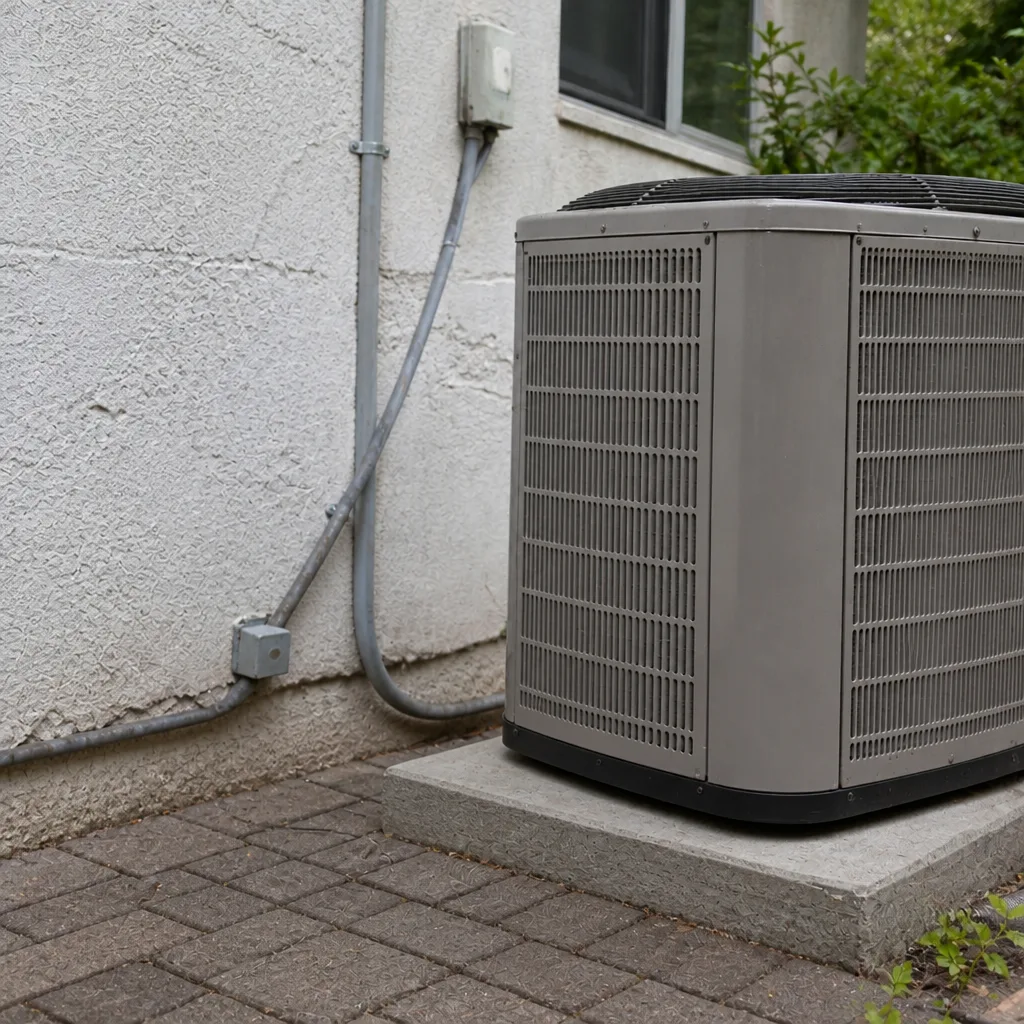 After
 Before
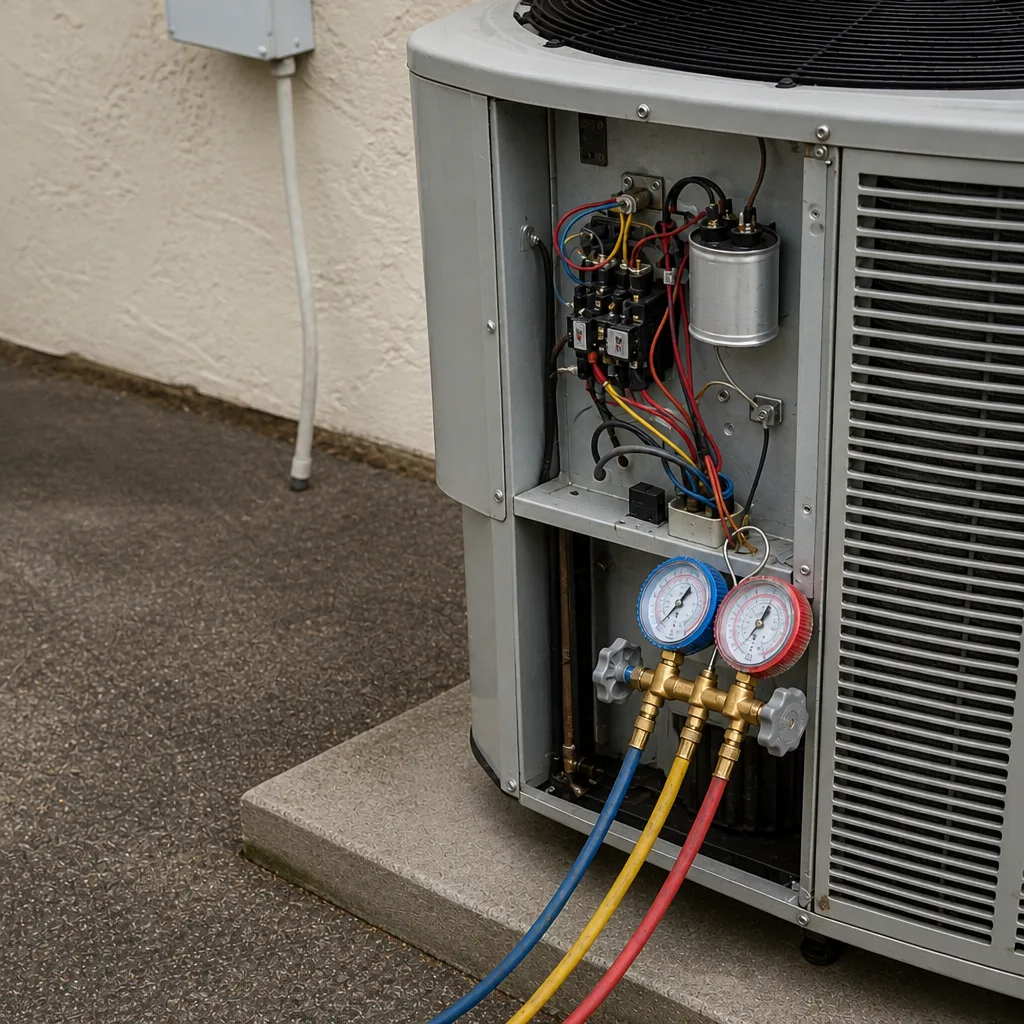 After
 Before
 After
When to Call a Professional
Call the original installer for anything that starts within the first weeks after installation, and give them the documented symptoms. Call an independent technician if the installer is unresponsive, if the same problem comes back after two visits, if the explanation keeps changing, or if you need a written second opinion. Shut the system down and call right away if you hear grinding, hissing, or banging, or if the outdoor unit fails to start at all. Do not open the outdoor unit or touch the electrical panel yourself: capacitor and contactor components can hold a dangerous charge even with the disconnect pulled, and refrigerant lines run at pressures that need gauges and training to handle safely.
Remington AC Repair offers free estimates in Pembroke Pines. Call (866) 237-6150. We answer 24/7. Fast dispatch from 7am to 7pm, Sunday through Friday. Our technicians have up to 15 years of experience, and we work on systems from nine major manufacturers, including Carrier, Trane, Bryant, and American Standard, so an installation assessment comes from a technician with no incentive to favor one brand. If your heating side needs attention too, our furnace repair team covers the other half of the year.
Frequently Asked Questions
Yes. A startup check confirms the system turns on and cools, but it doesn’t catch an oversized unit, a slight undercharge, or a thermostat wired in a way that only shows up over a full afternoon. Those problems surface in the weeks after installation as short cycling, humidity that won’t drop, or temperature swings. That’s why the first 30 days are the window to watch and document.
Usually not. The manufacturer warranty generally covers the equipment and its parts, and it doesn’t normally cover labor or the consequences of an installation that was done wrong. The installer’s workmanship coverage is the one that applies, which is why the callback goes to them first. Read both sets of paperwork so you know which one applies to what you’re seeing.
An oversized unit cools quickly, shuts off before it removes much humidity, and cycles more often than it should. The rooms hit the set temperature but feel clammy, and the run times are short. The way to confirm it is a load calculation for the home, not a guess based on square footage. Call (866) 237-6150 if you want an independent assessment of what your system was sized for.
Write down the on and off times for an afternoon, check that the filter is clean, and confirm the thermostat fan is set to “auto.” Then call the installer with that record. Short cycling in a new system points to sizing, charge, or thermostat wiring, and all three are installation issues. If the installer can’t resolve it, an independent assessment is the next step.
That’s usually an airflow or sizing problem, not a sign the unit isn’t working. The most common causes are a unit that’s oversized for the home, a blower speed set too high, a return duct that’s too small, or a fan set to run continuously. In Pembroke Pines humidity, the system has to run long enough to pull moisture out, and a system that shuts off early never gets that chance.
Bring in an independent technician when the installer has been out twice and the problem is still there, when the explanation keeps changing, when the installer has stopped responding, or when you need a written second opinion for a warranty or contractor dispute. If the system is new, the installer should get the first chance to make it right. Call (866) 237-6150 for an independent assessment when that first chance has run its course.
The Bottom Line
Most problems that show up in the weeks after a new AC installation in Pembroke Pines are installation problems, not equipment defects: an oversized unit, a charge that’s off, a thermostat wired wrong, or airflow that was never checked. Sorting the two categories tells you where to send your call and what to document. Keep a log from day one, take photos and short videos, save every service ticket, and start with the original installer. Bring in an independent technician when the same problem keeps coming back or you need a written second opinion. If you’d like a straight assessment of what’s happening with your system, our team at Remington AC Repair works on the major brands without a bias toward one, and the estimate is free.
Call (866) 237-6150. We answer 24/7. Fast dispatch from 7am to 7pm, Sunday through Friday. Call today for a free estimate.
Written by the team at Remington AC Repair.