
Last updated November 16, 2026
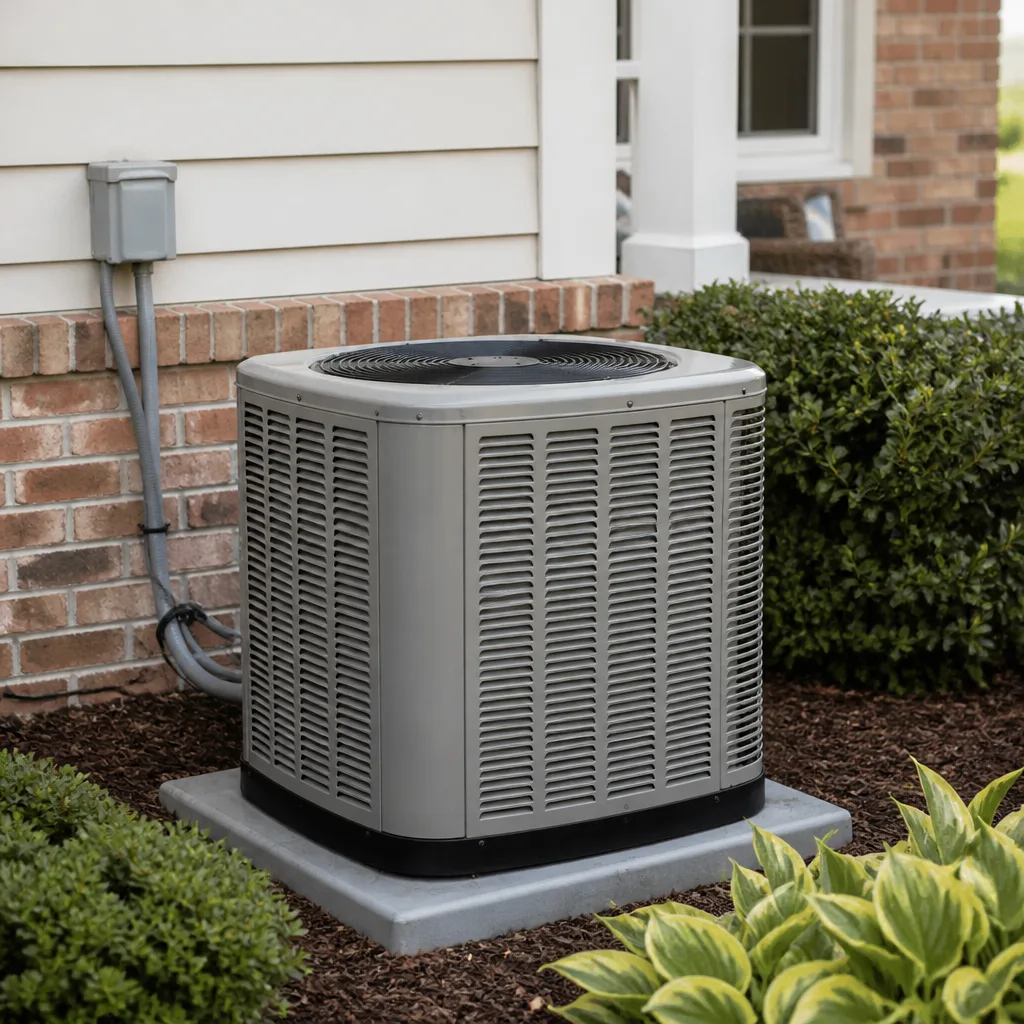 AC repair
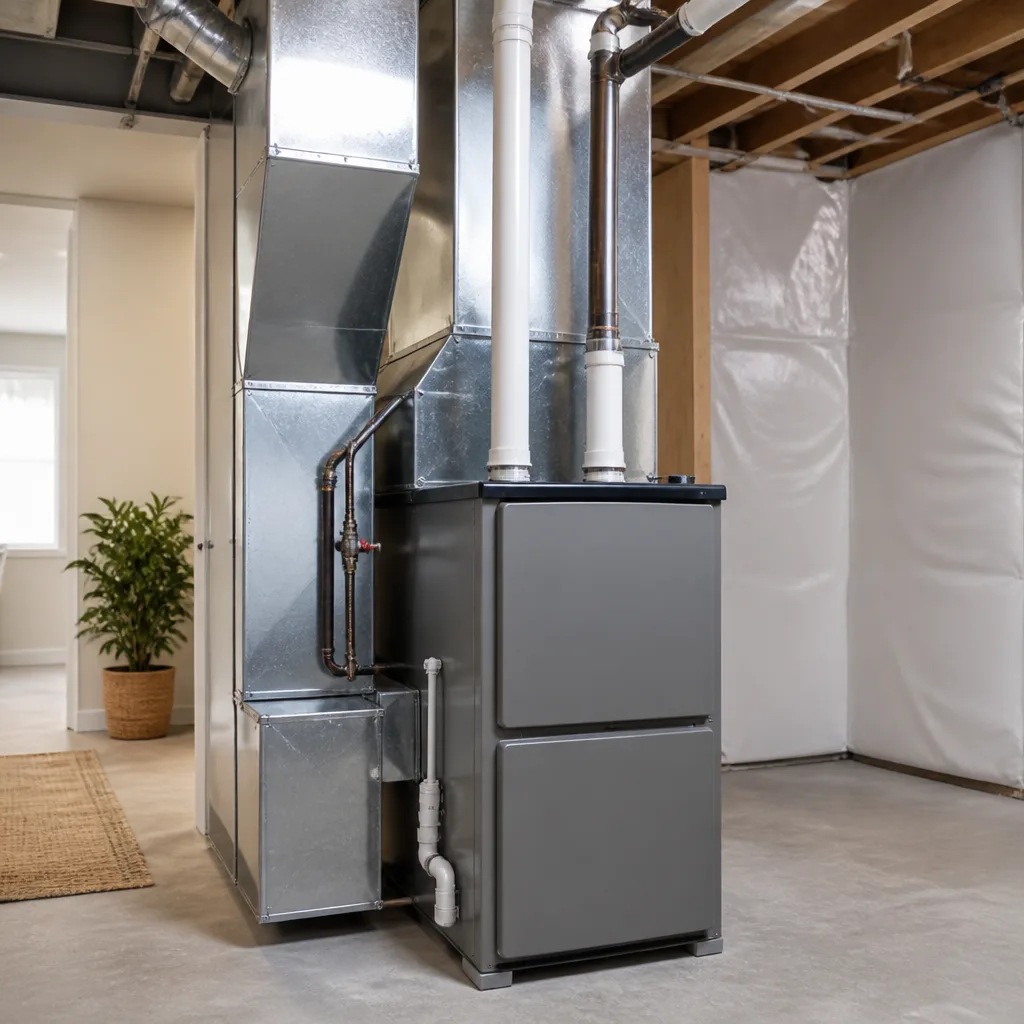 Furnace & heating
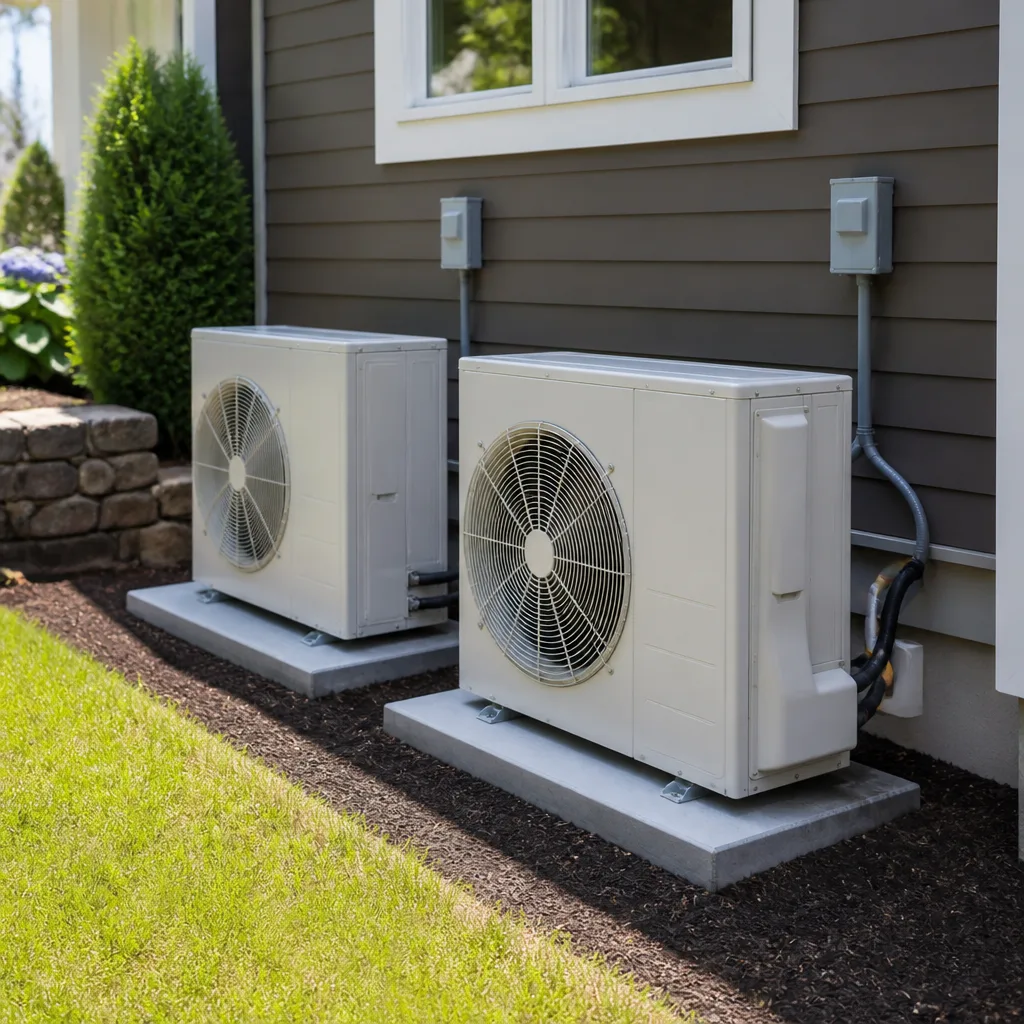 Heat pumps
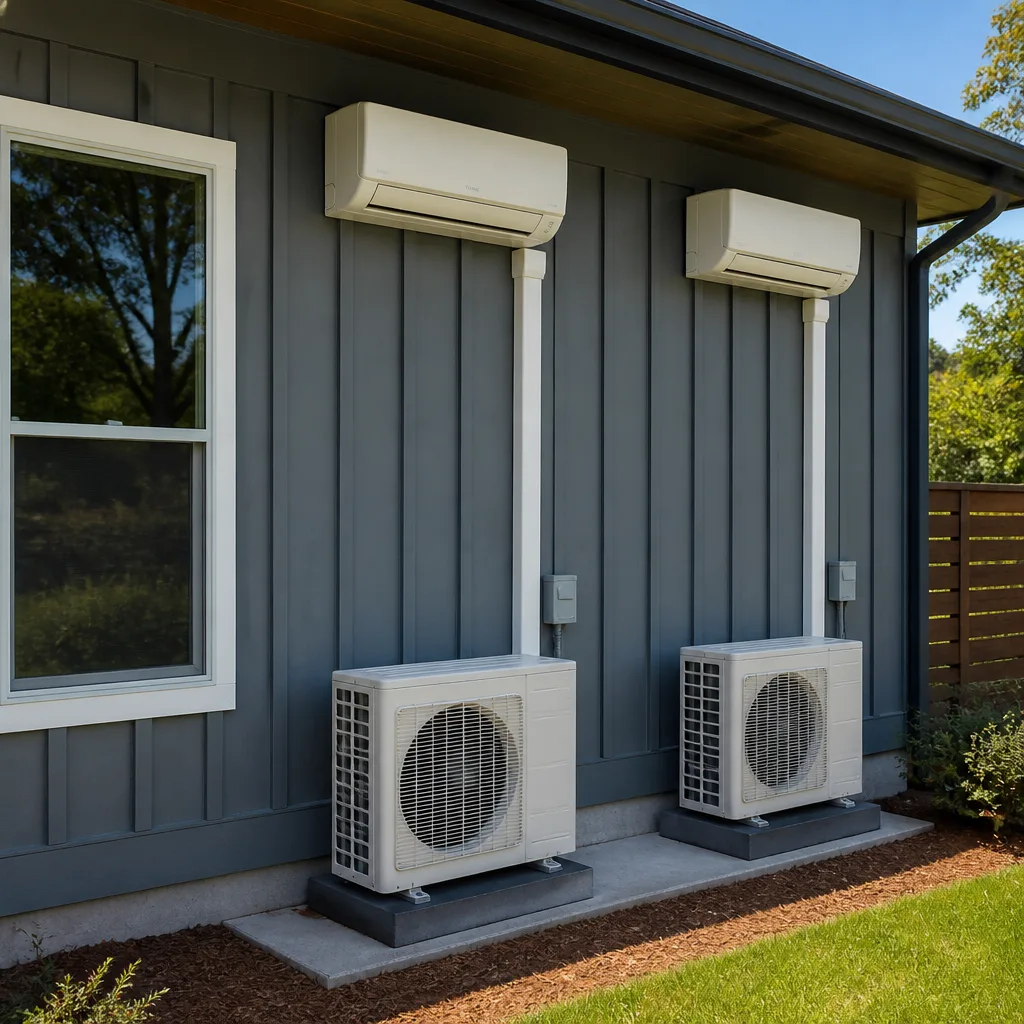 Ductless mini splits
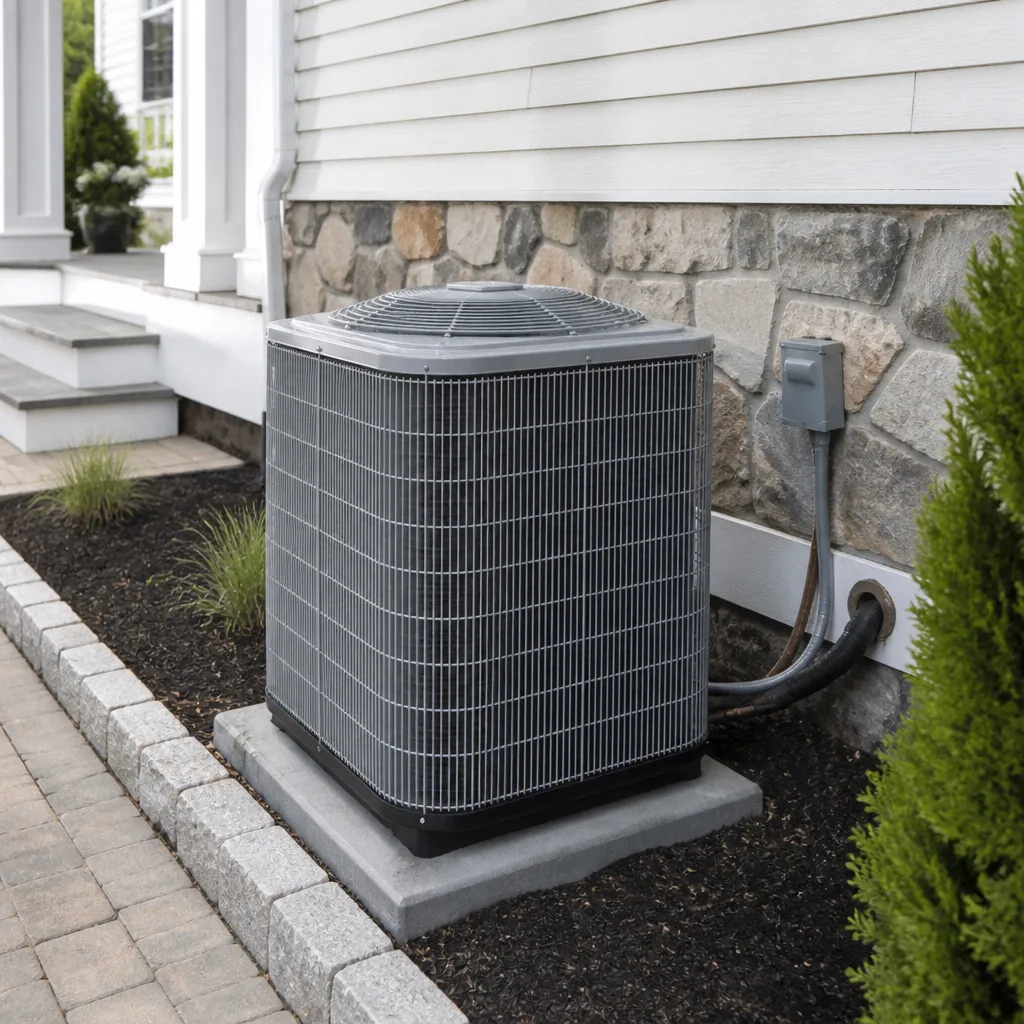 Carrier
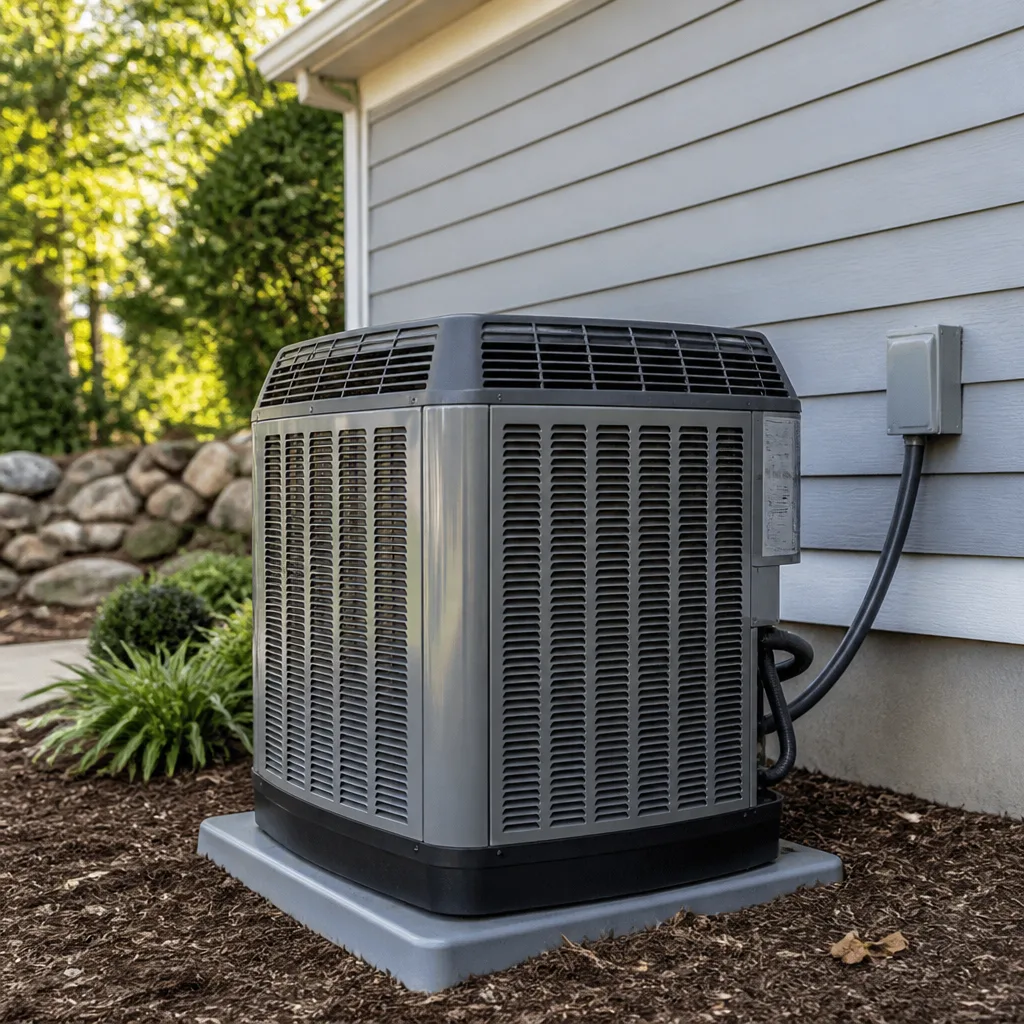 Trane
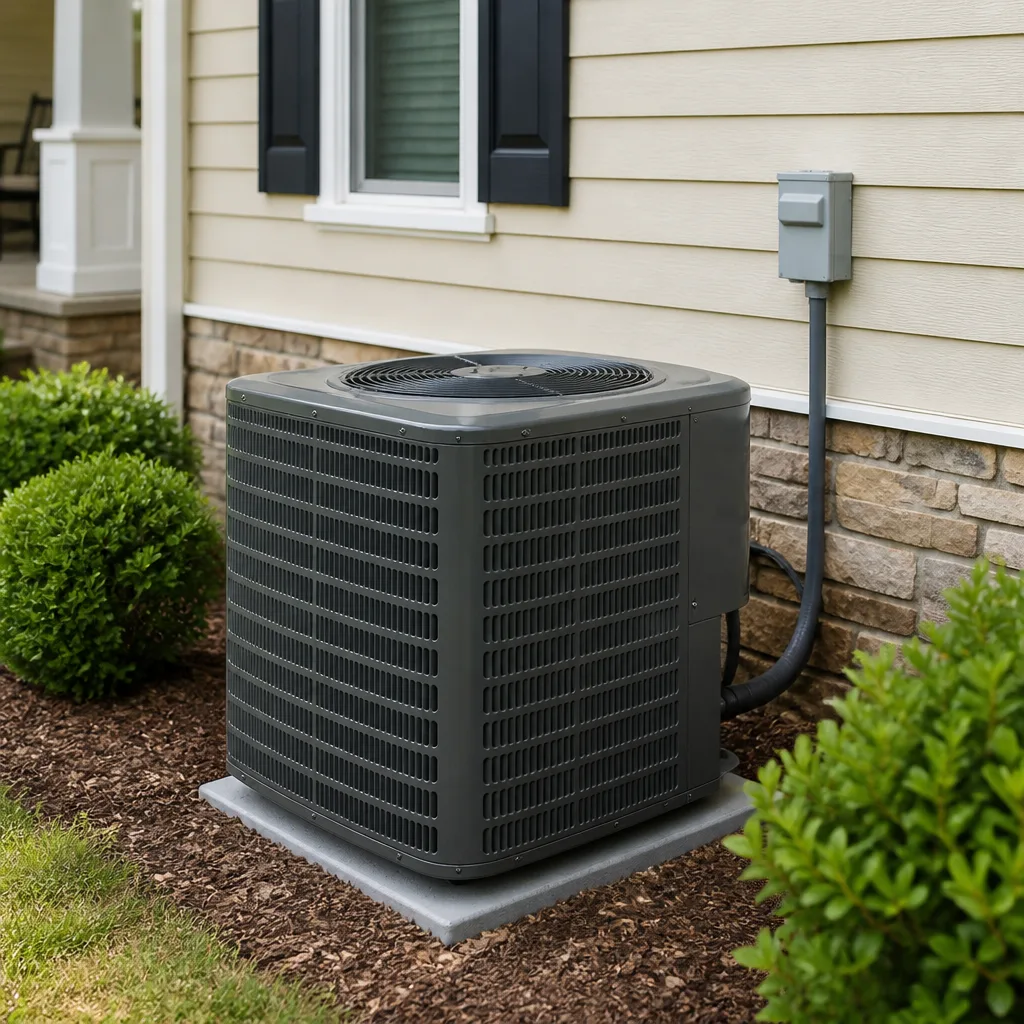 Goodman
Seasonal tune-up and full diagnostic on your Carrier, Trane, or Goodman system - readings shown to you before any repair is proposed
Diagnosis first, numbers second - you approve the repair price before a single part goes in.
Get your free estimateThe Complete AC Installation Guide for Pembroke Pines Homeowners
Most AC failures within the first two years trace back to installation day, not to a defect hidden inside the equipment. That single fact should reshape how you plan a new system. Search “AC installation” and you’ll find page after page comparing brands, SEER2 ratings and price tags, as if the box on the pad decides everything. It doesn’t. A well-chosen unit installed with a skipped load calculation, reused undersized ducts, or short-run refrigerant lines will underperform from the first summer. This guide walks through the decisions that actually determine whether a new system in Pembroke Pines cools, dehumidifies and lasts. You’ll learn how to verify the work before you pay for it.
Quick Answer
A successful AC installation in Pembroke Pines depends far more on the work done before the unit goes in than on the badge on the cabinet. A proper Manual J load calculation, an honest inspection of existing ductwork, correct refrigerant line routing for slab-on-grade construction, and a Broward County permit with final inspection all matter more than brand choice. The written estimate should spell out each of those steps, and the commissioning checklist at the end is how you confirm the job was done right.
Styles & brands we work with
- AC repair
- Furnace & heating
- Heat pumps
- Ductless mini splits
- Carrier
- Trane
- Goodman
Table of Contents
- Why Manual J Load Calculation Comes First
- Slab-On-Grade Construction and Refrigerant Line Routing
- Inspecting Existing Ductwork Before a New Unit Goes In
- Permits and Inspection in Broward County
- Choosing Equipment That Fits Your Home
- What Installation Day Should Look Like
- Reading the Commissioning Checklist
- What AC Installation Costs in Pembroke Pines
Why Manual J Load Calculation Comes First
A Manual J load calculation is the room-by-room math that determines exactly how much cooling capacity your home needs, and in Pembroke Pines it is not optional. South Florida humidity changes the equation in ways a quick “rule of thumb” square-footage guess never captures. If you’ve ever had a contractor glance at your ceiling height and announce a tonnage on the spot, they skipped the step that matters most.
The calculation accounts for window orientation and glass type, ceiling and wall insulation, how much shade the structure gets, the direction the home faces, air infiltration and the internal heat from people and appliances. Because our summers hold humidity near the top of the comfort range for months, getting the sensible and latent load balance right is what lets a system pull moisture out of the air instead of just blowing cool-but-clammy air around.
An oversized unit is the most common failure we run into. A unit that’s too big cools the house in a few minutes of every cycle, then shuts off before it has time to remove humidity. The result feels cold and sticky at the same time, and the compressor wears from constant short cycling. An undersized unit runs endlessly and never quite keeps up on the hottest afternoons. Both problems are baked in the moment the wrong equipment is ordered.
Here’s how to verify a calculation was actually done:
- Ask to see the Manual J (or equivalent load calculation) report before signing anything. It should list each room with its own square footage, window details and calculated load.
- Confirm the report reflects your actual insulation, glass and square footage, not a default template.
- Ask how the recommended tonnage traces back to the report. A good contractor can walk you through the math in plain language.
If the answer is “we always put a 3-ton in homes like yours,” that’s not a load calculation. It’s a habit.
Slab-On-Grade Construction and Refrigerant Line Routing
Most Pembroke Pines homes sit on a concrete slab, and that single construction detail shapes how refrigerant lines and condensate drains get routed between the indoor air handler and the outdoor condenser. There’s no basement or crawlspace to run lines through, so the line set travels through the attic, across interior walls, or along the exterior and into the slab-line path established at build. When a new system goes in, those paths either get reused carefully or they get cut through walls in ways that haunt the homeowner later.
Refrigerant lines are the veins of the system, and short, clean runs matter. Every unnecessary bend and every extra foot of line adds pressure drop the compressor has to overcome. Here’s what to watch for:
- Line length and routing. The new line set should follow the shortest practical path. A lazy route that loops around to save the installer time costs efficiency for the life of the system.
- Brazing and nitrogen purge. Lines are joined by brazing copper. A careful installer flows nitrogen through the pipe while brazing so oxidation doesn’t form inside and eventually clog the metering device. This is invisible when done right and expensive to fix when skipped.
- Insulation on the suction line. The cold line must be fully insulated and the insulation sealed at the ends. Bare spots sweat in our humidity and waste capacity.
- Condensate drainage. The drain has to slope correctly and discharge where it won’t pool against the slab or foundation. Poor drainage is the leading cause of water damage tied to AC systems.
The combination of interior slab and flat, well-drained lots means condensate management deserves a specific question at the estimate stage. Ask where the drain line will run and where it will terminate.
Inspecting Existing Ductwork Before a New Unit Goes In
Ductwork inspection must happen before any new unit goes in, because skipping it is the fastest way to erase every efficiency gain you’re paying for. A high-efficiency system pushing air through leaky, crushed or undersized ducts delivers a fraction of its rated capacity. You’ve spent on equipment that can’t perform.
In older Pembroke Pines neighborhoods, ductwork often hides in the attic and has never been looked at since the home was built. Flexible duct gets pinched or crushed where it bends. Seams separate. Insulation degrades and the attic heat cooks the cool air before it ever reaches a register. Here’s what a real inspection covers:
- Static pressure measurement. This tells the installer whether the duct system can actually move the air volume the new unit needs.
- Visual inspection of the entire run, including attic segments, for crushed sections, disconnected joints and missing insulation.
- Leak check at plenums, boots and takeoffs, where most leakage happens.
- Register airflow check, room by room, so you know any weak rooms before the equipment is chosen rather than after.
If the ducts need sealing or replacement, that work should be included in the written estimate. A contractor who quotes the equipment and waves off the duct question is either not planning to inspect or planning to keep the finding to themselves until it’s a change order. Both are worth avoiding. Our AC installation process starts with that inspection for exactly this reason.
Permits and Inspection in Broward County
AC installation in Broward County requires a permit, and the work is subject to inspection before the job is considered complete. The permit pulls the installation into the code process: it ties the equipment change to the building department and requires the work to be inspected by someone outside the installing company. Skipping it is not a small shortcut.
Here’s what happens if your installer skips the permit:
- The installation isn’t part of the official record, which creates problems when you sell the home and a buyer’s inspector finds an unpermitted changeout.
- Manufacturer warranties can be affected when a changeout has no inspection trail.
- Code compliance is unverified. A problem the inspector would have caught at rough-in gets discovered by you later, when it’s your money fixing it.
- Insurance and property record questions get messy when a claim or a refinance touches the equipment.
Ask at the estimate stage who pulls the permit and who schedules the inspection. The answer should be the installing company, and both should be included in the price you were quoted. We tell every homeowner the same thing: an installation without a permit isn’t finished, no matter how nicely the new unit runs. If you want that paper trail and a clean inspection, Remington AC Repair handles it as a standard part of the job.
Choosing Equipment That Fits Your Home
Equipment choice should come last, after the load calculation, duct inspection and permit plan are settled. Once you know the required capacity and the air distribution is fixed, brand and model become a shorter conversation. That’s the order that keeps you from paying for a cabinet full of features your ducts can’t support.
We’re certified to work on nine major brands, including Trane, Lennox, Goodman and Rheem, and we install and service virtually any residential system already in a Pembroke Pines home. That matters for one simple reason: our recommendation has no brand bias. We’re not steering you toward whichever manufacturer happens to be sitting in a warehouse. The right unit is the one that matches your calculated load, fits the available space and your electrical service, and matches a service model you can actually get parts and support for years from now.
When comparing quotes, look past the tonnage number:
- Capacity match. The tonnage should trace back to your load calculation, not a rule of thumb.
- Electrical compatibility. The new condenser’s amperage and breaker requirements should match what your panel and disconnect can support.
- Line set and drain compatibility. Reused or new, these need to be documented.
- Warranty terms. Ask for the actual paperwork, and note whether labor is covered.
Compare two or three written estimates line by line. The cheapest equipment price rarely produces the cheapest system.
What Installation Day Should Look Like
Installation day is a sequence, not a single action, and you should be able to predict the steps before anyone arrives. A well-run changeout has a clear beginning, middle and end, and the homeowner gets informed at each stage. Here’s how a typical day unfolds:
- Arrival, placement protection and confirmation of the plan with you.
- Pump-down and safe removal of refrigerant from the old unit, plus removal and disposal of the old equipment.
- Pad and curb preparation, then placement of the new condenser.
- Line set installation or reuse, brazing with a nitrogen purge, and evacuation of the lines to a deep vacuum.
- Electrical connections and low-voltage control wiring.
- Condensate drain routing and testing.
- Start-up, refrigerant charge adjustment per manufacturer’s specifications, and air balance.
- Walking you through the system, filters and thermostat before anyone leaves.
There’s a safety point here worth stating plainly. The electrical work at the disconnect and breaker, and any gas work at the furnace section of a combined system, are genuinely dangerous. We don’t give step-by-step instructions for that work and we don’t recommend homeowners tackle it. A trained technician handles it, and the permit and inspection process is what confirms it was done correctly.
Ask upfront when the old unit leaves, how long the day typically takes, and whether the system will be running before the crew leaves the property. Fast dispatch from 7am to 7pm, Sunday through Friday, is how our visits are scheduled.
Reading the Commissioning Checklist
The commissioning checklist is the single most useful document you’ll receive, and it’s the one most homeowners file away without reading. It’s the record of what the technician measured to confirm the system was set up correctly. If you get nothing else from this guide, get in the habit of asking for that checklist and looking at it before the final payment.
Here’s what should appear on it:
- Refrigerant charge verification. Subcooling (and superheat, on a fixed-orifice system) measured against the manufacturer’s spec. A unit charged “by feel” runs inefficiently and can shorten compressor life.
- Temperature split. The difference between return air and supply air tells you whether the coil is transferring heat as it should.
- Static pressure readings. These confirm the ducts can handle the airflow the new unit delivers.
- Airflow check at each register. You want the weakest room measured, not assumed.
- Thermostat setup. Cycle rate, fan settings and schedule configured to your home.
- Electrical verification. Breaker size, disconnect, and voltage confirmed at the equipment.
Walk the checklist with the technician. Ask for the numbers. If the response to “what was the subcooling reading?” is a shrug, you haven’t been given the depth of service you’re paying for. Good furnace repair work and good AC work share a trait: both come with measurements, not adjectives.
What AC Installation Costs in Pembroke Pines
There’s no single right number for a new system in Pembroke Pines, and any guide that hands you one is guessing. What we can do is give you a clear picture of how pricing is structured and what the written estimate should contain, so you can compare quotes on equal terms.
Installation pricing usually breaks into four buckets:
- Equipment. The condenser, air handler or coil, and any heating component. This varies widely with size, efficiency tier and brand.
- Labor and installation materials. Line sets, pad, brazing materials, electrical and drain work.
- Ductwork correction or replacement. This is often left out of a “low” quote, then added later as a change order.
- Permit and inspection fees. Also frequently omitted, sometimes to make a price look smaller.
Because pricing is per job and set by the written estimate, the most useful thing you can do is ask for that estimate in writing with each line item visible. A quote that bundles everything into one number makes comparison impossible. Our estimates are free and itemized so you can see exactly what you’re paying for. When you’re ready to review your home’s needs with someone who services all nine major brands with no inventory bias, call us at Pembroke Pines and we’ll come out to take the measurements.
Common Mistakes to Avoid
- Accepting a tonnage based on square footage. A quick “you’ve got about 1,800 square feet, you need three tons” is a guess, not a load calculation. In our humidity, that guess is how homes end up cold and clammy.
- Letting a contractor skip the duct inspection. A new high-efficiency unit on leaky, undersized ducts can’t deliver its rated performance. Insist on a static pressure reading and visual inspection before the equipment is ordered.
- Choosing equipment before the load calculation. Brand-first shopping produces whatever was on the installer’s truck. Calculation-first shopping produces the system your home actually needs.
- Skipping the permit. An unpermitted changeout is an unresolved item on your property record that surfaces at resale or inspection. Always confirm the permit and inspection are in the price.
- Accepting a reused line set without inspection. Old lines can hold contaminants that damage a new compressor. If lines are reused, they need a proper flush and pressure test.
- Not asking for the commissioning checklist. Without it, you have no way to know whether refrigerant charge, airflow and electrical were verified. Ask for the numbers before you pay.
- Hiring the company that skips the conversation. A defensible installation plan is one the installer can explain. If you can’t get a straight answer about the load calculation, the ductwork or the permit, keep calling.
See the difference
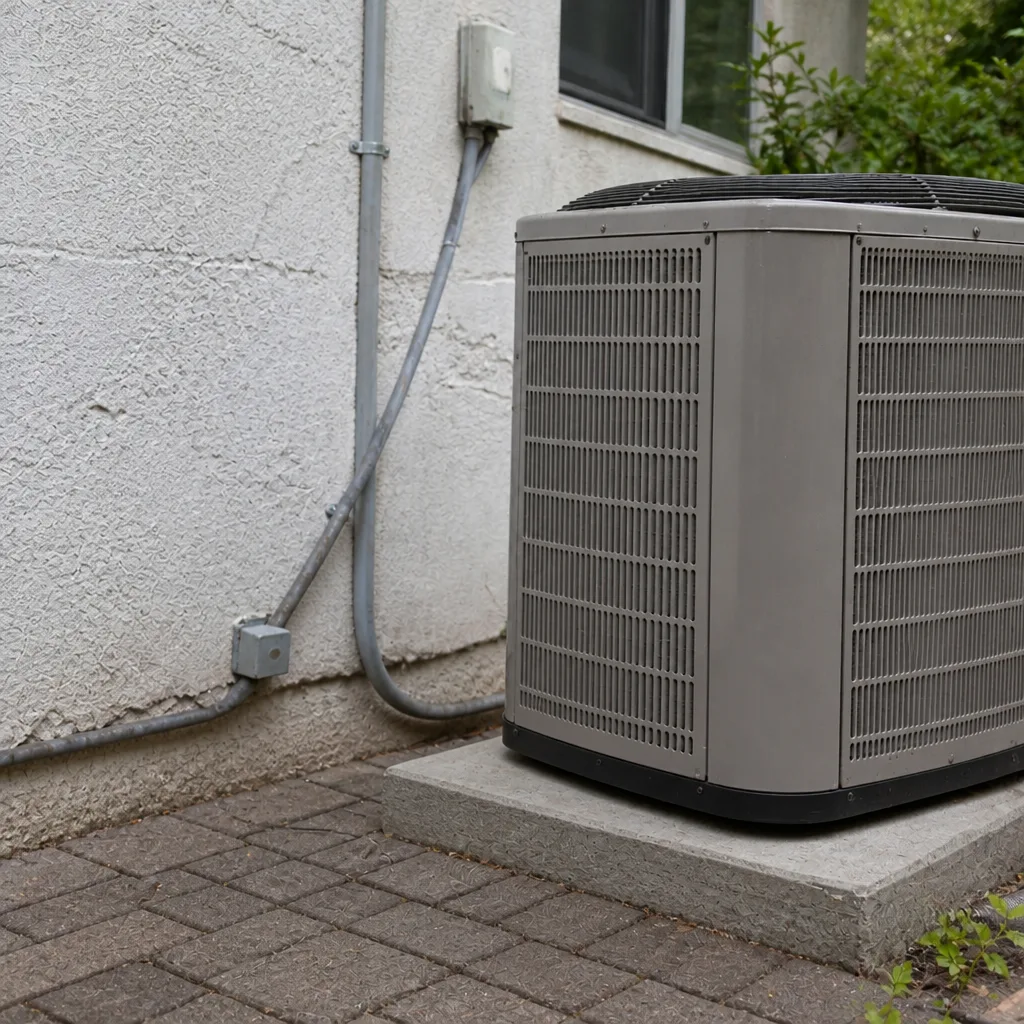
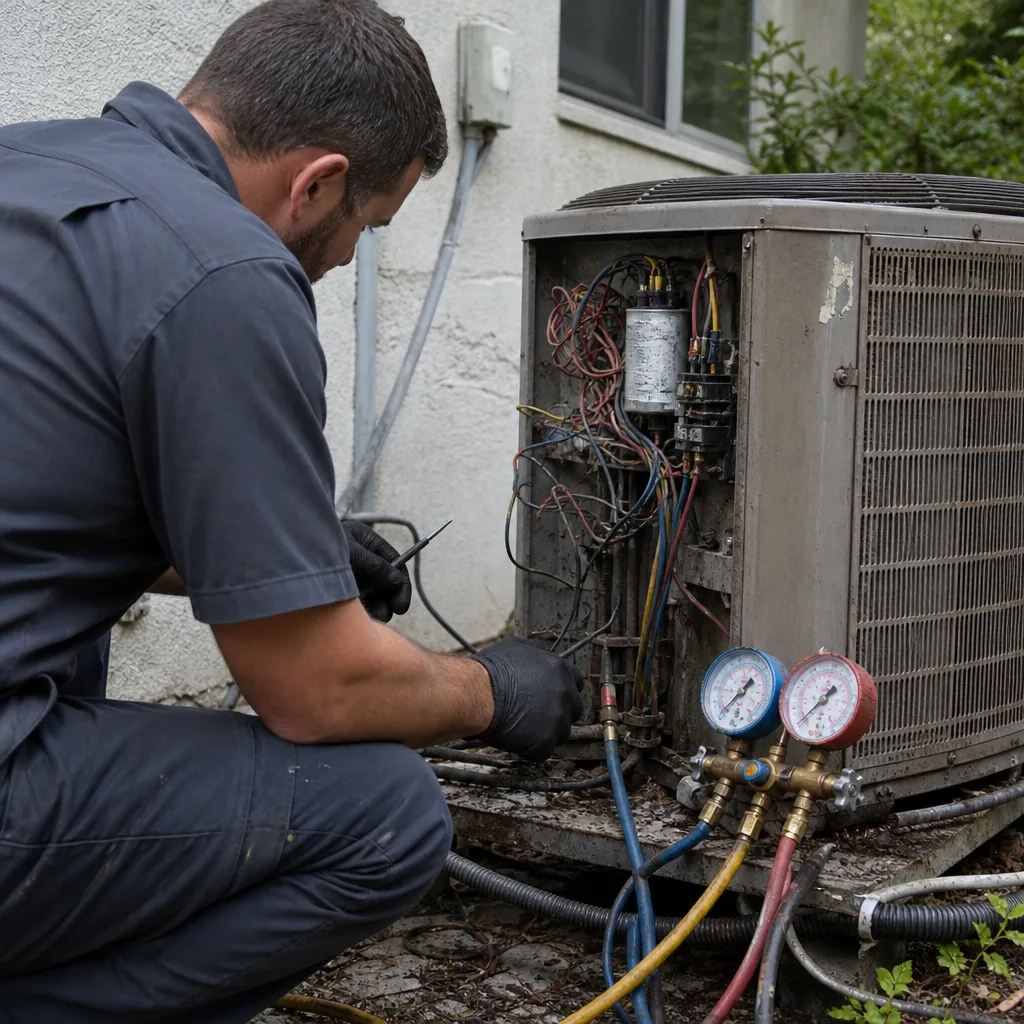 Before
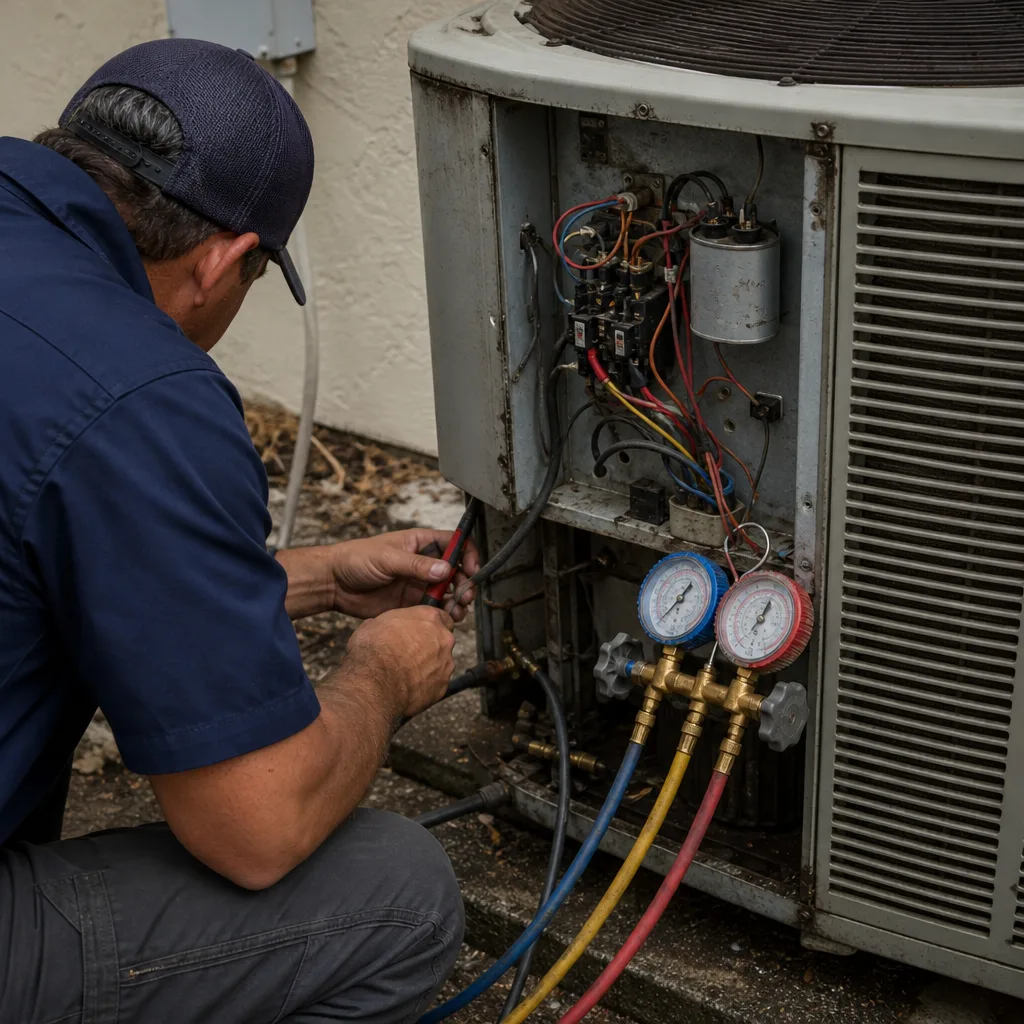
 After
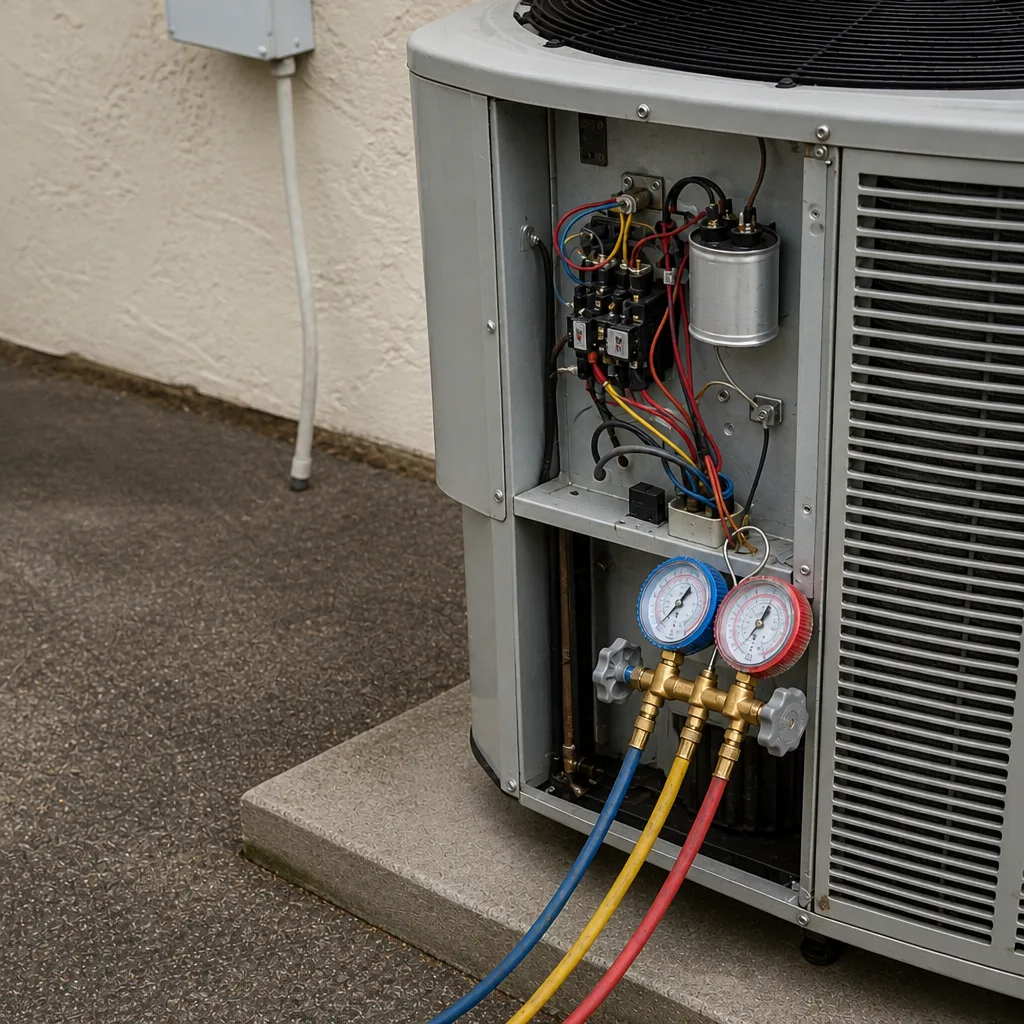
 Before
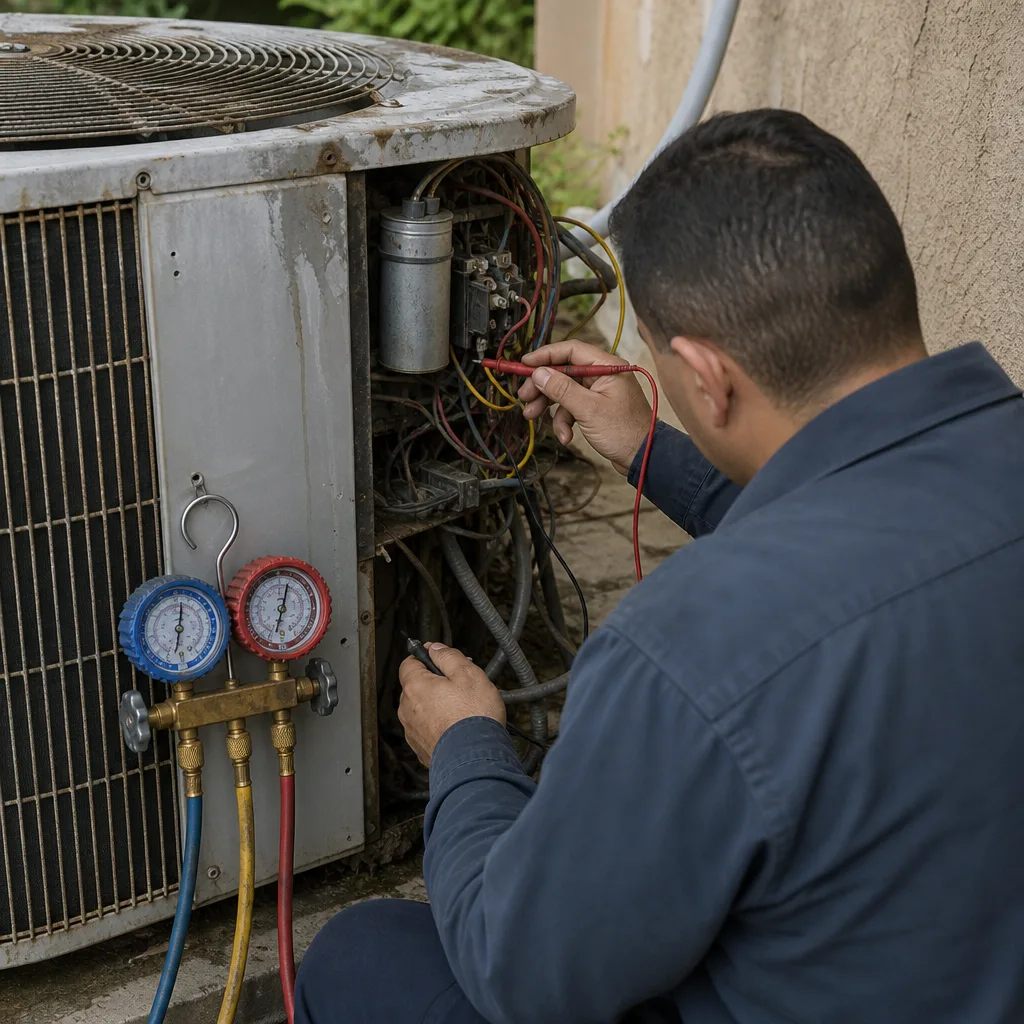
 After
 Before
 After
When to Call a Professional
Some problems need a technician and can’t wait. An AC that’s blowing warm air in July, a system that trips its breaker, a refrigerant line icing up, or a compressor that short-cycles need a trained diagnosis. If your system is on its last legs and you’re deciding whether to repair or replace, that decision deserves an honest assessment: a repair that costs a third of replacement value on a unit near the end of its life is a repair you may regret. The same applies on the heating side, where furnace replacement sometimes makes more economic sense than another season of repairs. Remington AC Repair offers free estimates in Pembroke Pines – call (866) 237-6150. We answer 24/7, and fast dispatch runs from 7am to 7pm, Sunday through Friday.
Frequently Asked Questions
A straightforward residential changeout typically takes one day, and a more complex job with ductwork correction or line set replacement can run into a second day. The written estimate should state the expected duration so you can plan around it. Call (866) 237-6150 for a schedule based on your home.
Yes, a permit is required for an AC installation in Broward County, and the work is subject to inspection. The installing company should pull the permit and schedule the inspection as part of the job. Confirm both are included in your written estimate before you sign.
The right size can only be determined by a Manual J load calculation, which accounts for your home’s insulation, window orientation, shade and internal heat gain. Square footage alone is not enough, especially in South Florida humidity. Ask for the calculation report, then call us for help reading it.
We’re certified to install and service nine major brands, including Trane, Lennox, Goodman and Rheem, so we can work with virtually any system already in your home. Because we service all of them, our recommendation reflects your home’s calculated needs rather than a single brand’s availability. Call (866) 237-6150 to discuss options.
A repair makes sense when the fix is cost-effective relative to the system’s remaining life; a replacement makes sense when the system is aging and the repair is a stopgap. Our furnace repair work follows the same principle. We give a straight answer on your system rather than pushing a sale.
Not always, but the ducts must be inspected before a new unit goes in. Leaky, crushed or undersized ducts can erase much of the efficiency the new equipment is supposed to deliver. The inspection and any recommended duct work should be in the written estimate.
The Bottom Line
The success of your AC installation in Pembroke Pines is decided well before the technician opens the new box. The load calculation sets the equipment size. The duct inspection determines whether the system can actually deliver the air it produces. The refrigerant line routing and condensate drainage have to suit slab-on-grade construction. The Broward County permit and inspection keep the job accountable. And the commissioning checklist is your proof that the setup was measured, not eyeballed. We work on your system, not just the brands we sell, and our recommendation follows the calculation and the ducts. Get the estimate, read the checklist, and don’t let anyone skip the steps that matter.
Get a Free Estimate on Your Pembroke Pines AC Installation
If you’re weighing a new system or deciding whether a repair is worth it, call (866) 237-6150 for a free estimate. We answer 24/7, and fast dispatch runs from 7am to 7pm, Sunday through Friday. Our technicians have up to 15 years of experience, we service nine major brands, and we’ll walk you through the load calculation, duct inspection and permit plan before anyone touches your equipment.
Related reading on our site: the parent service page for Remington AC Repair.
Written by the team at Remington AC Repair.